How to Get Kids Started Cross-Country Skiing
Cross-country skiing gives children a healthy way to enjoy winter, develop balance and confidence, and experience the satisfaction of moving across snow under their own power. However, a child’s first outing should be designed around fun—not distance, speed or perfect technique.
The goal of the first day is simple: help your child finish the experience warm, proud and excited to ski again.
Here are our best practices for introducing children to cross-country skiing.
1. Choose classic skis and begin on flat terrain
Classic cross-country skiing is generally the easiest style for children to learn because the skis remain mostly parallel and use a natural forward motion.
Begin in a flat, open area where your child can experiment without worrying about hills or faster trail traffic. Let them stand, shuffle, turn and fall before attempting to travel any meaningful distance. A very gentle hill can be introduced later, after they are comfortable balancing and stopping.
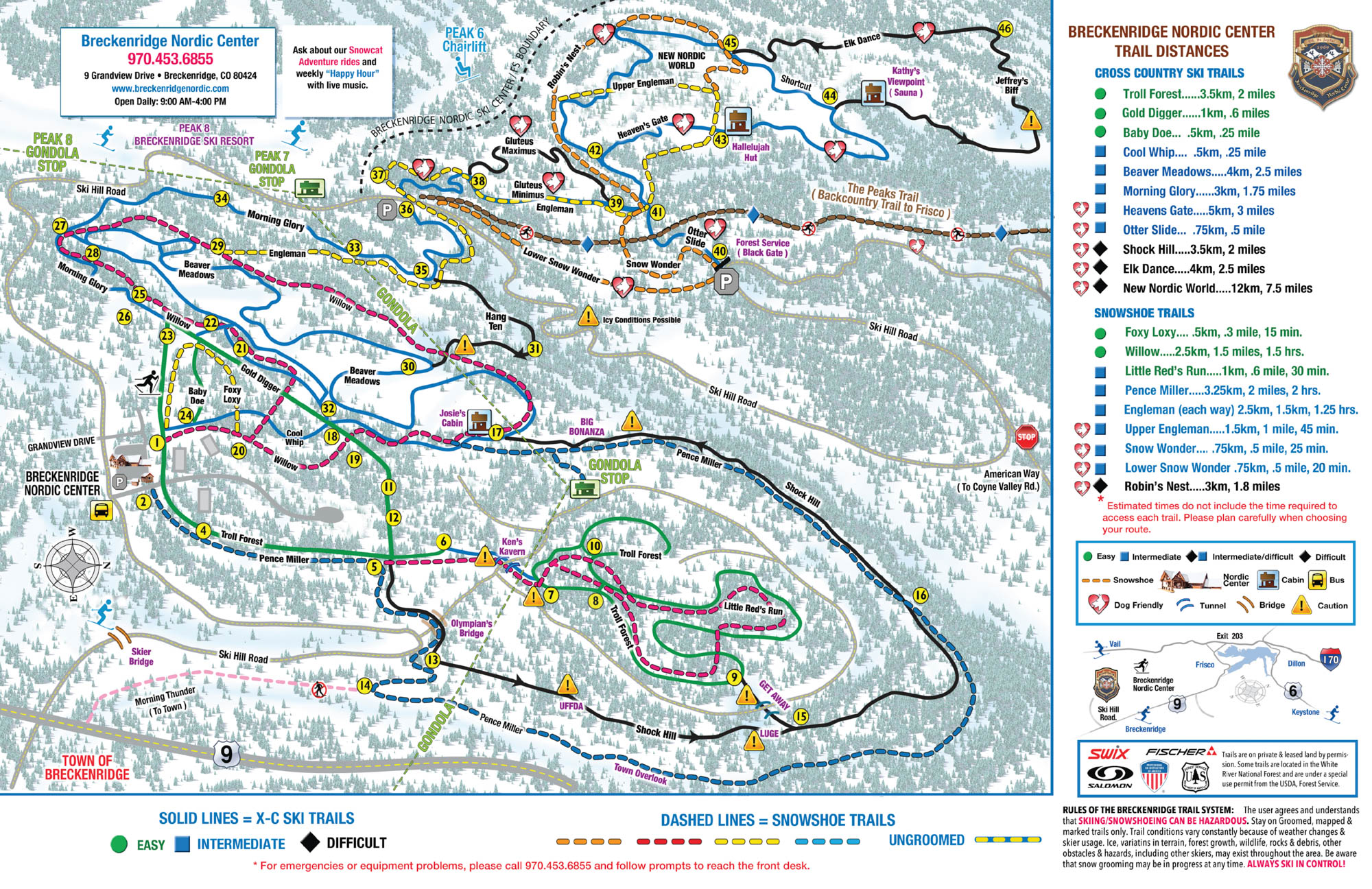
The Breckenridge Nordic Center staff can recommend beginner terrain based on your child’s age, confidence and current snow conditions.
2. Keep the first outing short
For a small child, 15 to 30 minutes may be a complete first ski outing—and that is perfectly fine.
Young children are still learning their physical limits. They can change quickly from energetic and excited to cold, hungry and exhausted. Ending before that happens gives them a positive memory and makes them more likely to want to return.
Measure success by smiles and new skills rather than distance. One enjoyable lap around a beginner area is more valuable than a long outing that ends in frustration.
3. Make sure every piece of equipment fits
Poorly fitting equipment can ruin a child’s experience before skiing has truly begun.
Parents sometimes put children in oversized boots so they can grow into them. Unfortunately, a boot that is too large or loose allows the foot and ankle to move inside it, reducing control and making balance much more difficult.
Boots should fit comfortably and be tightened correctly. Skis should also be selected according to the child’s size, weight and ability—not merely age. Skis that are too long or stiff can make it difficult for a small skier to grip the snow and move forward.
Our staff can fit children with properly sized skis and boots and make sure everything is secured before they head outside. Learn more about our cross-country ski rentals and equipment fittings.
4. Start without poles
Poles add another layer of coordination that young children often do not need on their first day. Let your child begin by moving naturally and learning to balance on the skis.
Try having them shuffle with their arms swinging freely. You can also remove one ski and let them push along like they are riding a scooter. This teaches balance and forward movement without requiring them to coordinate two skis and two poles at once.
Poles can be introduced when they become helpful rather than distracting.
5. Teach children how to fall and get back up
Falling is a normal part of learning. A child who knows how to get up independently is less likely to become frightened or frustrated.
Practice falling and getting up while everyone is still happy and close to the starting area. Make it into a game: have the child lie on their back with their skis in the air like a “dead bug,” bring the skis together, move them to one side and then roll over before standing.
Learning this skill early builds confidence and saves parents from repeatedly lifting a child off the snow.
6. Turn practice into games
Children often learn more through play than through technical instruction. Games encourage them to balance, turn and move without concentrating on whether they are performing each motion correctly.
Try activities such as:
- Red Light, Green Light
- Follow the Leader
- Short relay races
- Tag in an open area
- Skiing around cones
- Picking up objects from the snow
- Gliding with one ski
- Pretending to be different animals
- Racing toward a parent or nearby landmark
Keep games in an open area away from busy trail traffic. The objective is movement and laughter—not competition.
7. Ask about tip skins
The Breckenridge Nordic Center has developed a special teaching tool called a “tip skin.” Tip skins are approximately 24-inch sections of nylon climbing skin that attach only to the front portion of a child’s skis.
The nylon creates additional resistance against the snow, slowing the skis and making them feel more stable. This can help a small child gain confidence and control without eliminating the basic skiing motion.
Tip skins can be particularly helpful for very young children or those who are nervous about their skis sliding. Ask our rental staff whether tip skins would be appropriate for your child.
8. Keep children warm—but avoid overheating
Warm children are usually happy children, but cross-country skiing also generates considerable body heat.
Dress children in moisture-wicking layers that can be added or removed. Avoid cotton because it retains moisture and can become cold when wet. Pay particular attention to hands, feet, ears and necks.
Bring spare mittens and socks whenever possible. Children frequently put their hands in the snow, and wet mittens can end an outing quickly. Sunglasses or goggles and sunscreen are also important because sunlight reflects strongly off the snow.
Check your child frequently rather than waiting for them to complain. Some young children do not recognize that they are becoming cold until they are already uncomfortable.
9. Keep children fed and hydrated
Cold weather, physical activity and Breckenridge’s high elevation can cause children to tire more quickly than parents expect.
Offer water regularly, but do not force excessive amounts. Bring snacks that are easy to eat in cold temperatures and will not become rock-hard in a pocket. Children who arrive hungry or dehydrated are much more likely to struggle physically and emotionally.
Parents should also watch for unusual fatigue, headache, nausea or a sudden loss of enthusiasm, particularly when children have recently arrived at altitude. Take a break or end the outing if a child does not feel well.
10. Use treats and destinations as motivation
A small reward can turn an abstract distance into an achievable goal.
Instead of saying, “We are skiing another kilometer,” try, “Let’s ski to the next sign and have a snack.” A destination hut, interesting trail feature or promised cup of hot chocolate gives children something concrete to anticipate.
Bavarian pretzels and hot cocoa in the lodge make excellent post-ski rewards. The objective is not to force a reluctant child to continue indefinitely, but to add fun and encouragement to a reasonable goal.
11. Be willing to remove your own skis
A parent on skis may have difficulty reaching, steadying or encouraging a very small child.
You may need to remove your skis and walk alongside your child during the first outing. This allows you to help with balance, reposition skis and provide reassurance without becoming tangled in your own equipment.
Your child’s first experience is not the day to maximize your own skiing time. Focus on what will make learning simplest for them.
12. Let children help set the pace
Adults tend to think in terms of completing a trail or reaching a destination. Children may be satisfied after skiing in circles, climbing a small bump or playing one game repeatedly.
Whenever possible, give them simple choices:
- Would you like to play another game or ski toward the trail sign?
- Do you want to use poles or leave them behind?
- Should we take another lap or go inside for hot chocolate?
A little control can transform an activity from something a child is being made to do into an adventure they are helping to create.
13. Choose a good day for the first experience
A child’s first outing does not need to happen during extreme cold, strong wind or icy trail conditions.
Whenever possible, choose a calm day with comfortable temperatures and forgiving snow. Visit during a quieter non-holiday period so the beginner area is less crowded and your child does not feel pressured by other skiers.
Check the current trail and grooming report before leaving home. The free Go BNC app also provides current conditions and a GPS-enabled trail map.
14. Take pictures—but remain present
Photos and short videos can capture a wonderful family memory and allow children to see their own progress.
Take a few pictures, then put the phone away. Children need encouragement, eye contact and help more than they need a complete video record of the outing. Staying present also helps you recognize when they are becoming cold, tired or frustrated.
The best photograph is often the one taken while your child is still having fun—not after asking them to complete one more lap.
15. Bring a pulk sled as a backup plan
A pulk is a specially designed sled that an adult pulls behind them while cross-country skiing. It can carry extra clothing, food, water and other family gear. It can also provide a place for an appropriately aged child to ride when tired.
A pulk can extend a family outing without requiring a young child to ski all the way back. However, the adult towing it should be comfortable on cross-country skis and remain on appropriate terrain. The added weight changes stopping, climbing and descending.
A child riding in a pulk is not producing body heat like the person pulling it. Check the child frequently and provide extra insulation as needed. Follow the pulk manufacturer’s age, restraint and safety instructions, along with guidance from our rental staff.
Consider a lesson or invite another family
Some children listen and learn differently when the instructor is not their parent. A family cross-country ski lesson can give children a positive introduction while helping parents learn how to reinforce the same skills.
Skiing with siblings or friends can also make the experience feel more like play. Children frequently become more willing to try, fall and laugh when other children are doing the same thing.
Finish while they are still having fun
The most important advice is to stop before the experience falls apart.
A successful first day does not require covering a complete trail, mastering a snowplow or skiing for several hours. It may consist of putting on skis, playing two games, falling down, getting back up and celebrating with hot chocolate.
Leave something for the next visit. A child who finishes saying, “Can we keep going?” is much more likely to develop a lasting love of cross-country skiing.
Read more about why the Breckenridge Nordic Center is good for families or plan your family’s visit.